
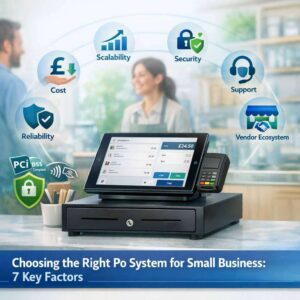
Selecting the right purchase order (PO) system is a crucial decision for small businesses aiming to streamline procurement, control costs, and maintain clear supplier relationships. This article, written from an expert perspective, explores seven essential factors to consider when evaluating software for purchase orders. By understanding these elements, you can choose a solution that scales with your business while delivering tangible efficiencies.
1. Cloud vs On-Premise: Where Will Your Data Live?
A core decision for many small businesses is whether to adopt a cloud based purchase order software or an on-premise option. Cloud purchase order system solutions offer automatic updates, easier multi-site access, and reduced IT overhead. They’re particularly advantageous for businesses with remote teams or multiple warehouses. In contrast, on-premise software for purchase orders may appeal to organisations with strict data sovereignty requirements or limited internet reliability. For most small businesses, cloud based purchase order software provides superior flexibility, resilience, and total cost of ownership.
Po system for small business solutions streamline purchasing workflows, improve control, and reduce errors. With a Po system for small business, organizations gain centralized approval processes, real-time visibility, and automated data entry, freeing teams to focus on growth. Explore scalable options at cloudb2b.co.uk to see how integration with accounting and ERP enhances efficiency. Implementing a Po system for small business also strengthens supplier relationships and helps maintain compliance across procurement activities. Start modernizing procurement today.
2. Integration Capabilities with Existing Systems
A purchase orders software should not operate in a vacuum. Look for a system that integrates smoothly with your accounting software, ERP, inventory management, and e-invoicing workflows. Strong integrations reduce manual data entry, minimise errors, and speed up the workflow from PO creation to goods receipt and payment. If you already use popular accounting packages or ERP systems, verify that the PO software supports native connectors or has reliable API access. This is especially important for a cloud purchase order system that aims to become the central hub of procurement activity.
3. Usability and Adoption Across the Team
Software for purchase orders should be intuitive for non-technical staff. A user-friendly interface lowers training time and accelerates adoption, which directly impacts your return on investment. When evaluating prospective solutions, request a live demonstration focused on day-to-day PO tasks: creating purchase orders, routing for approvals, attaching supplier quotes, and tracking delivery status. Consider role-based access controls to tailor the experience for purchasers, managers, and finance personnel. A well-designed PO system reduces the learning curve and supports consistent process execution.
4. Approval Workflows and Governance
Robust approval workflows are a cornerstone of effective PO management. The right cloud purchase order system enables custom approval hierarchies, conditional routing, and automatic escalation for overdue or over-budget requests. A strong governance framework helps prevent maverick purchasing and enforces spend control. When evaluating options, map out your ideal approval paths: who can approve what, at what thresholds, and how exceptions are handled. The ability to modify workflows without IT intervention is a plus, particularly for small businesses that need to respond quickly to changing compliance or supplier requirements.
5. Visibility, Reporting, and Analytics
Actionable insights are what differentiate a good PO system from a great one. Look for real-time dashboards that present spend by supplier, department, and category, plus cycle times from PO creation to delivery. Advanced reporting should enable you to track procurement KPIs such as purchase order cycle time, order accuracy, and late deliveries. Data should be easily exportable for accounting reconciliation and audit purposes. A cloud based purchase order software often offers the added benefit of centralised analytics accessible from anywhere, which is valuable for small teams managing multiple projects or locations.
6. Compliance, Security, and Data Protection
Security should be a top priority when selecting a purchase order system. Ensure the vendor adheres to recognised security standards, provides encryption in transit and at rest, and conducts regular security assessments. For UK-based organisations, it’s wise to verify data storage locations and any compliance requirements relevant to UK data protection laws. Review the vendor’s disaster recovery plan, uptime commitments, and incident response procedures. If you handle supplier contracts or confidential pricing, confirm that role-based access and audit trails are in place to protect sensitive information.
7. Cost Structure and Total Cost of Ownership
Understanding the total cost of ownership is vital for small businesses with tight budgets. Pricing models for purchase order software UK offerings vary widely; some charge per user, others per transaction, and others on a subscription basis with tiered features. When comparing options, look beyond upfront fees to include ongoing costs such as maintenance, support, updates, and any charges for additional connectors or storage. A cloud purchase order system can yield savings through reduced IT maintenance and improved procurement efficiency, but ensure the chosen plan aligns with your anticipated growth and usage patterns.
Additional Considerations: Local Support and Vendor Stability
For many small businesses, local vendor support and clear service level agreements (SLAs) are as important as feature set. Evaluate the vendor’s track record, customer references, and the availability of UK-based support if you operate predominantly in the UK. A stable provider with transparent roadmaps reduces risk and ensures ongoing compatibility with evolving regulatory requirements and marketplace practices.
Practical Steps to Decide
- List your procurement processes and identify where pain points exist (e.g., duplicate data entry, delayed approvals, lack of visibility).
- Gather input from the purchasing, finance, and operations teams to define must-have vs nice-to-have features.
- Trial a short list of cloud based purchase order software or cloud purchase order system options with a representative group from your organisation.
- Check for compatibility with your existing software for purchase orders, as well as any critical customisations you rely on.
- Compare total cost of ownership over a 3- to 5-year horizon, including potential savings from increased efficiency.
Choosing the right PO system is about aligning technology with your business needs, rather than chasing every latest feature. Whether you opt for a cloud purchase order system or a more traditional software for purchase orders, the right solution will streamline purchasing, improve governance, and provide the visibility your organisation requires to grow confidently. For UK organisations, consider the availability of local support and the relevance of regional compliance when making your final decision.