
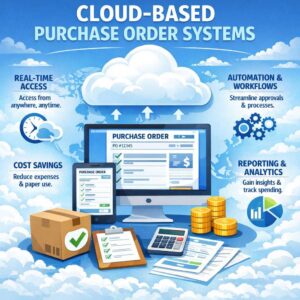
Streamlining your procurement process is easy with a reliable purchase order system. An efficient system simplifies ordering, tracks approvals, and manages inventory seamlessly. Implementing a robust purchase order system can save time, reduce errors, and improve overall business operations, ensuring smooth transactions every time.
In today’s fast-paced business environment, an efficient purchase order system (PO system) is essential for managing procurement processes effectively. Companies are increasingly faced with the decision of whether to adopt an on-premise solution or a cloud-based purchase order software. Both options have their own advantages and challenges, and the choice can significantly impact operational efficiency, scalability, security, and overall control. This article explores the key differences between on-premise and cloud-based PO systems, helping organisations make informed decisions tailored to their specific needs.
Understanding On-Premise Purchase Order Systems
An on-premise purchase order system is installed locally on a company’s own servers and hardware. It is a traditional approach to purchase order control within organisations and is often customised to fit specific business requirements.
Features of On-Premise PO Systems
On-premise PO system software typically offers a high level of control over data and system configuration. Organisations can customise features, integrate deeply with existing enterprise resource planning (ERP) systems, and manage security internally. These systems are often chosen by larger organisations with complex procurement processes or stringent data security requirements.
Advantages of On-Premise Solutions
-
Full Data Control: Organisations maintain complete control over their data, which can be crucial for compliance and security.
-
Customisation Flexibility: On-premise PO systems can be tailored extensively to match unique workflows and requirements.
-
Integration Capabilities: Easier integration with existing internal systems such as ERP or finance platforms.
-
No Dependency on Internet Connectivity: Operations can continue without internet access, which is vital in remote or secure environments.
Full Data Control: Organisations maintain complete control over their data, which can be crucial for compliance and security.
Customisation Flexibility: On-premise PO systems can be tailored extensively to match unique workflows and requirements.
Integration Capabilities: Easier integration with existing internal systems such as ERP or finance platforms.
No Dependency on Internet Connectivity: Operations can continue without internet access, which is vital in remote or secure environments.
Challenges of On-Premise PO Systems
-
High Initial Investment: Significant upfront costs for hardware, software licences, and specialised IT staff.
-
Maintenance and Upgrades: Organisations are responsible for ongoing maintenance, security patches, and system upgrades.
-
Scalability Limitations: Scaling the system as the organisation grows can be complex and costly.
-
Limited Mobile Access: Accessibility on the go can be limited compared to cloud solutions.
High Initial Investment: Significant upfront costs for hardware, software licences, and specialised IT staff.
Maintenance and Upgrades: Organisations are responsible for ongoing maintenance, security patches, and system upgrades.
Scalability Limitations: Scaling the system as the organisation grows can be complex and costly.
Limited Mobile Access: Accessibility on the go can be limited compared to cloud solutions.
Embracing Cloud-Based Purchase Order Software
Cloud-based purchase order software, often referred to as a cloud purchase order system, is hosted on external servers managed by a third-party provider. Organisations access the system via the internet, often through a web browser or mobile app.
Features of Cloud Based Purchase Order Software
Cloud PO systems offer user-friendly interfaces, ease of access from anywhere, and automatic updates. They often come pre-configured, reducing setup time, and are designed to facilitate online purchase orders, approval workflows, and reporting.
Advantages of Cloud-Based PO Systems
-
Lower Cost of Entry: Reduced upfront costs with subscription-based pricing models.
-
Scalability: Easily scale up or down depending on organisational needs without significant hardware investments.
-
Automatic Updates and Maintenance: Providers handle updates, patches, and security, reducing IT overhead.
-
Accessibility and Flexibility: Access the system from any location with internet connectivity, facilitating remote working and mobile approvals.
-
Rapid Deployment: Faster implementation compared to traditional setups, enabling quicker benefits realisation.
Lower Cost of Entry: Reduced upfront costs with subscription-based pricing models.
Scalability: Easily scale up or down depending on organisational needs without significant hardware investments.
Automatic Updates and Maintenance: Providers handle updates, patches, and security, reducing IT overhead.
Accessibility and Flexibility: Access the system from any location with internet connectivity, facilitating remote working and mobile approvals.
Rapid Deployment: Faster implementation compared to traditional setups, enabling quicker benefits realisation.
Challenges of Cloud Purchase Order Software
-
Data Security Concerns: Relying on external providers raises concerns about data privacy and control.
-
Internet Dependency: System availability is dependent on reliable internet connectivity.
-
Limited Customisation: Cloud solutions may be less flexible for highly customised workflows.
-
Compliance Considerations: Companies operating within specific regulatory environments need to ensure provider compliance.
Data Security Concerns: Relying on external providers raises concerns about data privacy and control.
Internet Dependency: System availability is dependent on reliable internet connectivity.
Limited Customisation: Cloud solutions may be less flexible for highly customised workflows.
Compliance Considerations: Companies operating within specific regulatory environments need to ensure provider compliance.
Key Considerations When Choosing a PO System
Selecting between an on-premise and a cloud-based purchase order control system depends on several organisational factors:
- Data Security and Compliance: For organisations handling sensitive data or subject to strict regulations, on-premise solutions may offer more control.
- Budget and Resource Availability: Smaller organisations or those with limited IT staff might prefer cloud-based options for cost and simplicity.
- Scalability and Growth Plans: Companies anticipating growth benefit from the scalability of cloud-based purchase order software.
- Integration Needs: Organisations with complex existing infrastructure might lean towards on-premise systems for tighter integration.
- Accessibility Requirements: Business models requiring remote or mobile access are better served by cloud solutions.
Purchase Order System UK: Local Support and Compliance
For businesses based within the UK, choosing a purchase order system that complies with local standards and offers robust support is crucial. Cloud-based purchase order software providers often have UK data centres, ensuring compliance with GDPR and other regulatory frameworks. Moreover, local providers are more likely to understand the specific needs of UK organisations, including VAT handling, local taxation, and supply chain considerations.
Final Thoughts
Whether opting for an on-premise or cloud-based purchase order system, organisations must evaluate their unique requirements, strategic goals, and resource capabilities. While on-premise PO systems offer greater control and customisation, cloud-based purchase order software provides scalability, ease of use, and potentially lower costs. By weighing these factors carefully, businesses can implement a purchase order system that enhances procurement efficiency, mitigates risks, and supports future growth.